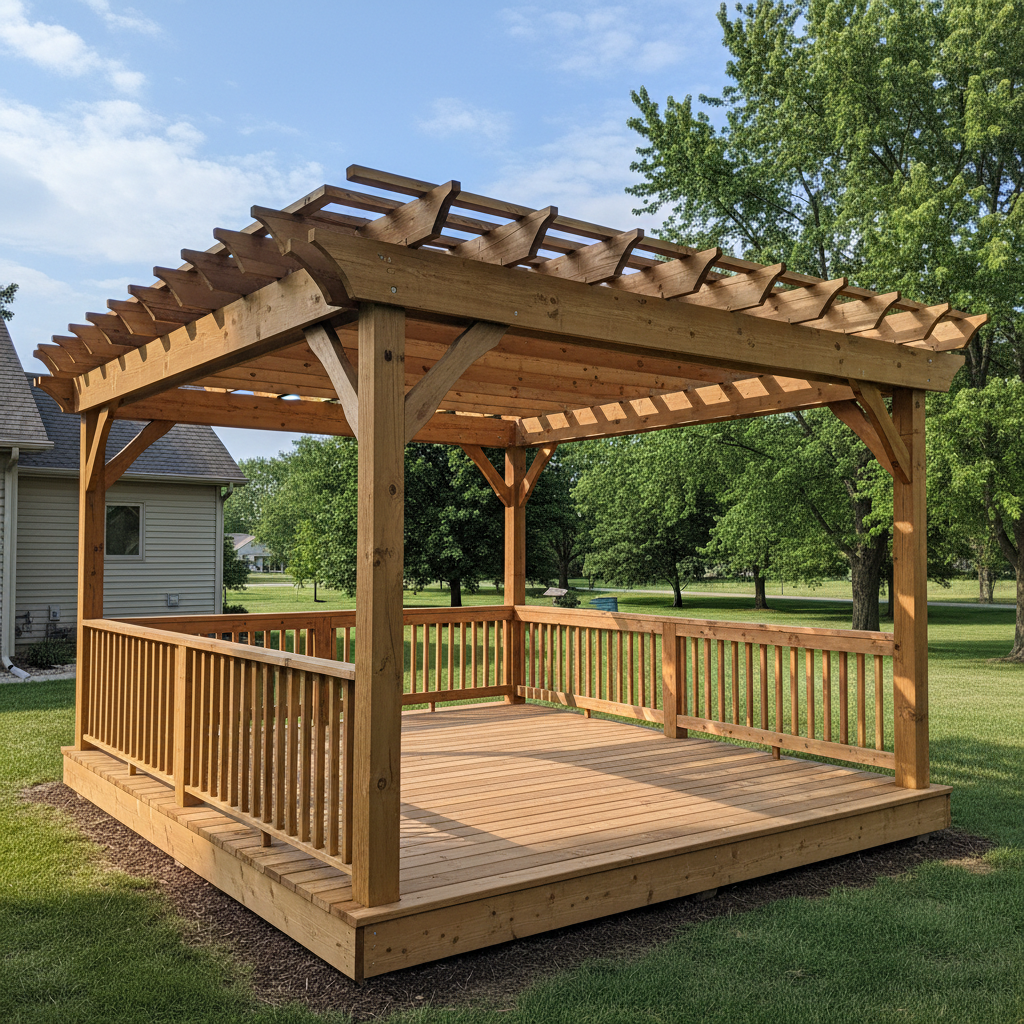
You've got a beautiful pergola, maybe Majestic Deck Builders even put it in for you. But now, how do you make sure it actually lasts through those hot, humid Fremont summers and brutal, icy winters? It's not just about looking good, you know; it's about protecting what you've paid for and keeping your outdoor space safe and working well for years.
Making Your Nebraska Pergola Last Longer
The biggest thing that decides how long your pergola sticks around is how well you shield it from the weather. Here in Fremont, we truly get it all: scorching sun, high humidity, freezing rain, heavy snow, and those crazy temperature swings. That's why properly sealing and staining are absolutely essential for any wooden pergola.
Think of it this way: your pergola is out there, exposed, 24/7. Wood needs a good seal to push away water and stop rot from setting in. I always suggest a high-quality, oil-based stain and sealer. It soaks in deeper than water-based stuff and gives much better protection against UV rays, which can really beat up wood over time. You'll want to put on a new coat every 2-3 years. This depends on the product you use and how much sun your pergola actually gets. If it's sitting out in an open yard in, say, the Countryside neighborhood, it'll probably need it more often than one tucked away under some big, old trees.
Now, for vinyl or composite pergolas, they generally last longer and don't need nearly as much work. You won't be staining or sealing those, but you still need to keep an eye on them. UV stabilizers in the material certainly help, but nothing lasts forever without a little bit of care, right?
Routine Maintenance: What You Should Be Doing
Regular maintenance isn't some huge, awful chore, but it really makes a world of difference. Here's what I tell folks:
- Clean it regularly: At least once or twice a year, give your pergola a good scrub. For wood, vinyl, or composite, a soft brush, some mild soap, and water usually do the trick. You can use a pressure washer on a very low setting, but be super careful with wood—too much pressure can really damage the fibers. Get rid of any dirt, pollen, spiderwebs, and especially any algae or mildew. That stuff just loves our humid Nebraska air and can start to break down finishes, even the material itself.
- Check fasteners: Nuts, bolts, screws—they can loosen up over time with all the temperature changes and wind. Go around and tighten everything up, especially before and after winter. A loose connection isn't just annoying; it can actually weaken the whole structure.
- Inspect for damage: Look for cracks, splinters, or any signs of rot on wooden pergolas. Check vinyl for cracks or if it's changing color. Make sure all connections feel solid. Pay extra attention to the posts where they meet the ground or deck; that's a really common spot for moisture damage.
- Clear debris: Keep leaves, branches, and other junk from piling up on top or around the base of your pergola. Trapped moisture is the enemy, plain and simple.
Warning Signs of Trouble
You don't need to be an expert to spot problems. Your pergola will pretty much tell you when something's wrong. Here are some red flags:
- Soft spots or rot: If you can poke a screwdriver into the wood easily, or if it feels spongy, you've definitely got rot. This needs to be dealt with immediately before it spreads or weakens the structure too much.
- Cracks or splits: Small surface cracks are common enough, but deep or really long cracks can point to structural issues or that the wood is drying out significantly.
- Pest activity: Sawdust piles, small holes, or buzzing sounds could mean carpenter bees, termites, or other wood-boring insects have moved in. These guys can do serious damage, and fast.
- Sagging or leaning: This is a big one, folks. If any part of your pergola looks like it's sagging, or if the whole thing seems to be leaning, that's a major structural concern. Don't ignore it.
- Loose or corroded fasteners: If bolts are rusty or falling out, or if connections feel wobbly, you've got a problem that needs attention.
- Excessive mildew or algae: While a little bit is normal, if it's thick, widespread, and won't come off with cleaning, it might be a sign of a persistent moisture issue or that the finish isn't doing its job anymore.
When It's Time to Call a Professional
Look, I'm all for DIY, but some things are just better left to the pros. If you see any of those major warning signs—especially sagging, significant rot, or pest infestations—don't try to fix it yourself unless you really, truly know what you're doing. A professional can properly assess the damage, make sure the structure is sound, and do repairs that actually last.
Also, if you're not comfortable with heights, or if you're dealing with a particularly large or complex pergola, it's just safer to call us. We've got the right tools, the experience, and we know exactly what to look for. Sometimes, what looks like a small issue to you could actually be a symptom of a much bigger problem. We're happy to come out and take a look, give you an honest assessment, and help you keep your pergola in top shape for years to come. Ultimately, it's all about protecting your investment and enjoying your outdoor space without a worry in the world.