What's the best material for a pool deck around here?
Alright, this is probably the first thing everyone asks, and for good reason. You've got a few main choices, each with its own good points and bad points, especially when you consider our Nebraska weather. Concrete is popular, sure; it's tough and you can stamp or stain it to look pretty nice. But it can get really hot, and if it cracks, fixing it is a real headache.
Then there's wood. Cedar or redwood can look absolutely beautiful, and they naturally resist rot and bugs. But around a pool? Wood needs constant sealing and upkeep to stand up to all the chlorine, splashes, and sun. It's a lot of work, and you'll end up replacing boards sooner than you'd like if you don't stay on top of it. Oh, and splinters? A major concern for bare feet.
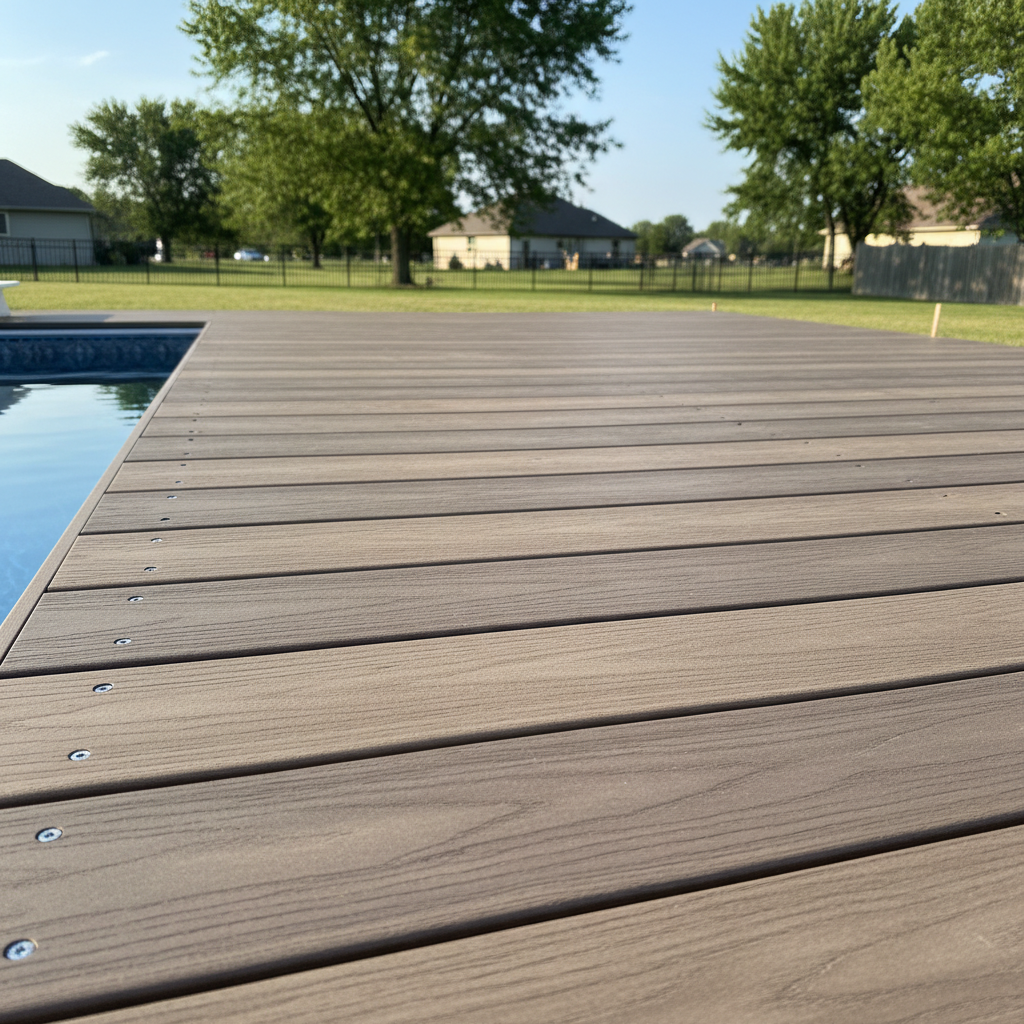
For my money, and what I usually suggest for pool decks, it's composite decking. Brands like Trex or TimberTech are made specifically to handle moisture, UV rays, and chemicals without rotting, splintering, or fading much. They even stay cooler than concrete or dark wood, which is a huge plus on a scorching Fremont summer day. You just can't beat how little maintenance they need. A quick wash now and then, and you're all set. It costs more upfront, yes, but it really pays off in the long run with less hassle and a longer life.
How important is drainage for a pool deck?
Super important. Seriously, don't skimp on this part. Handling water around a pool deck isn't just about avoiding puddles; it's about keeping your deck's foundation safe, stopping erosion, and making sure water doesn't collect against your house or the pool itself. Here in Fremont, especially with our clay soils in some spots, getting the grading and drainage right is absolutely critical. If water just sits there, it can weaken your deck's footings, which might lead to settling or even structural damage over time. Plus, it creates slippery spots, a definite safety hazard around any pool.
We always make sure the deck slopes gently away from the pool and any nearby structures. Sometimes we'll put in channel drains or use gravel beds to help move water away efficiently. It might seem like a small detail, but it makes a huge difference in how long and how safely your pool deck lasts. You want that water gone, not hanging around.
What about slip resistance? My kids are always running around.
You're right to think about this. Safety first, always, especially with kids involved. You need a surface that gives good traction even when it's wet. Smooth, sealed concrete can be really slick. Some natural stones, while gorgeous, can also be quite slippery. When we're talking composite, many brands offer textured surfaces specifically designed for better grip. They have patterns or finishes that aren't just for looks; they're there to help stop slips.
If you're going with concrete, you can get it finished with a broom texture or add an anti-slip additive to the sealer. For wood, even though it's not my top choice for pools, you can apply non-slip coatings. Whatever material you pick, always ask about its slip rating or what options are available to make it safer when wet. It's easy to forget, but it's one of the most important things for your peace of mind, isn't it?
How long does a pool deck construction usually take?
That's a tough one to give a single answer for, because it really depends on the deck's size and how complicated it is, the materials you pick, and even the weather. A simple, rectangular deck around an above-ground pool will obviously be much faster than a multi-level, custom-shaped deck with built-in features for an in-ground pool. Generally, once we've got the permits sorted out and the materials on site, a typical residential pool deck might take anywhere from one to three weeks to build. Bigger, more intricate projects could stretch to a month or even longer.
Things like ground preparation, especially if we're dealing with uneven terrain or need to bring in fill dirt, can add time. Also, if you're pouring concrete, you have curing times to factor in before you can even walk on it, let alone swim. We always give our clients a realistic timeline upfront, and we work hard to stick to it. We know you're eager to get that pool open!
Can I add features like built-in seating or planters to my pool deck?
Absolutely, and I highly recommend it! A pool deck isn't just a perimeter; it's really an extension of your outdoor living space. Built-in seating can be fantastic for entertaining, and it saves you from dragging out a bunch of patio furniture. Planters can add a lot of visual appeal, breaking up the hardscape with some greenery and color. We can integrate these right into the deck design, making them look seamless and custom-built.
Other popular features include things like privacy screens, outdoor kitchens, or even pergolas for some shade. When Majestic Deck Builders designs a pool deck, we're not just thinking about where people walk; we're thinking about how you'll use the entire space. We'll talk through all your ideas and figure out how to incorporate them safely and effectively into the overall design. It's all about making your backyard a true oasis.
What kind of maintenance can I expect with a new pool deck?
Alright, this goes back to materials, but generally, you're looking at pretty minimal maintenance if you pick wisely. For composite decks, it's mostly about keeping it clean. A simple hose-down to get rid of loose debris, and then a scrub with a soft brush and some soapy water for tougher spots or spills. You'll want to do this regularly, especially after a big storm or if leaves have been sitting on it. Just don't use a pressure washer on too high a setting, as it can damage the surface of some composites.
If you went with concrete, you'll want to sweep it regularly and maybe power wash it once a year. If it's sealed, you might need to reapply sealer every few years, depending on wear and tear. Wood, as I mentioned, is the most demanding. You're looking at regular cleaning, and then staining or sealing every year or two to protect it from the elements and pool chemicals. No matter what, keep an eye out for any standing water, and address it quickly. Good maintenance keeps your deck looking good and lasting longer, plain and simple.