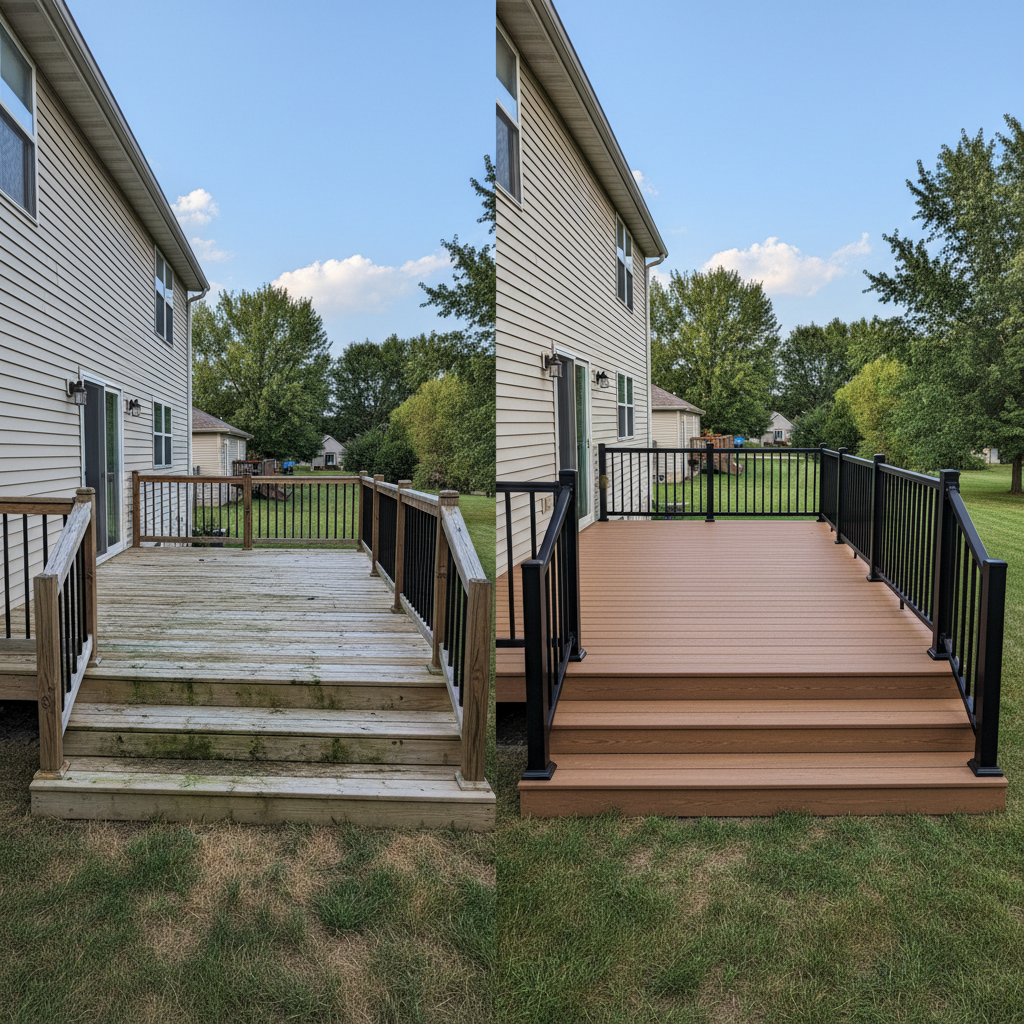
So, you've settled on Trex for your new deck – great choice, especially with our wild Nebraska weather. Good thinking! But then you hit another snag: grooved edge boards or square edge boards? It's not just about what looks good, you know. There are real differences in how much it costs, how it gets put together, and what you'll actually see every single day. Let's chat about what really makes sense for a deck right here in Fremont.
Grooved Edge Trex: The Hidden Fastener Champ
When most folks picture a modern composite deck, they're probably imagining grooved edge boards. These boards have a little channel routed along each side, made specifically for those hidden fastening systems. You know the ones – clips that slide into the grooves and screw down into the joists, so you don't see any screws on the deck's surface. Pretty neat, huh?
Here's the lowdown on grooved edges:
- Appearance: This is where they really shine. No visible fasteners means you get a super clean, smooth surface. It looks really sharp, especially on a bigger deck or if you're going for that seamless, high-end vibe.
- Installation: Generally, it takes a bit longer to install compared to just screwing through the top. Each clip has to be placed and screwed in, and you're working with specific spacing. But, for many, the finished look is totally worth the extra time.
- Cost: You're definitely looking at a higher upfront cost, no two ways about it. The grooved boards themselves can be a little pricier, and those hidden fasteners? They really add up. Oh, and don't forget the labor cost; it can be a bit higher because the installation is, well, more detailed.
- Maintenance: Super easy. There aren't any screw heads to catch dirt or water, so cleaning is a breeze. Just sweep or wash a smooth surface.
- Durability: Just as tough as any other Trex board. The hidden fasteners actually protect the board's surface from direct screw penetration, which can sometimes cause minor issues down the road with face screws.
For many people building a new deck in places like the Indian Trails neighborhood, where curb appeal and a polished look are a big deal, grooved edge is often the way to go. It just feels more custom.
Square Edge Trex: The Versatile Workhorse
Square edge boards are exactly what they sound like: straight edges, just like traditional wood lumber. These are made to be face-screwed, meaning you drive screws right through the top of the board and into your joists. Think about how a traditional wood deck gets built; it's pretty much the same idea.
Here's what you get with square edges:
- Appearance: You'll see the screw heads. Some folks don't mind this at all; it gives off a more traditional, almost industrial look. You can even get color-matched screws, which helps them blend in, but they'll still be visible.
- Installation: Generally faster. You lay the board, screw it down. It's a much more straightforward process, which can save you some money on labor.
- Cost: Typically more budget-friendly. The boards themselves are often a little less expensive, and face screws are way cheaper than those hidden fastener clips. This can make a big difference in your overall project cost, believe me.
- Maintenance: Still low maintenance compared to wood, but those screw heads can sometimes collect a little dirt or dust. Not a huge deal, but something to keep in mind.
- Durability: Trex is tough, plain and simple. Face-screwing doesn't mess with the board's structural integrity. However, over many, many years, extreme temperature swings (which we definitely get here in Nebraska) can sometimes cause a tiny bit of